
The Maldives Built an Ecosystem of More Than 80 Seaplanes for 2.25 Million Visitors. With 6,000 Islands and Islets and 43.3 Million Inbound Travellers, Greece Can Create Europe’s Largest and Most Diverse Seaplane Network — and Aim for Global Leadership
With approximately 6,000 islands and islets, 227 inhabited islands and a record 43.3 million inbound travellers in 2025, Greece’s tourism market is almost 19 times larger than that of the Maldives — the country that has demonstrated to the world that seaplanes can become the backbone of an island economy.
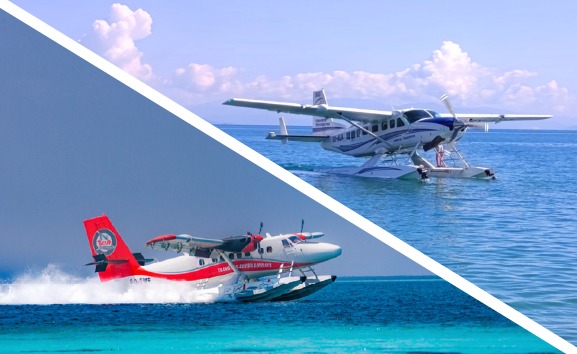
In the Maldives, an archipelagic nation welcoming just 2.25 million visitors annually, seaplanes are not a luxury — they are essential infrastructure. Three air operators — Trans Maldivian Airways, Manta Air and the national carrier Maldivian — operate a combined fleet of more than 80 seaplanes.
Trans Maldivian Airways alone, the world’s largest seaplane operator, added its 66th aircraft to its fleet this year and operates more than 400 flights per day to over 80 resorts across 16 atolls. The ecosystem is supported by a dedicated USD 55 million seaplane terminal adjacent to Malé International Airport — the largest seaplane terminal in the world.
The Greek market, however, does not merely offer comparable potential. It surpasses it by a considerable margin.
A Market Almost 20 Times Larger
Greece has approximately 6,000 islands and islets — five times as many as the Maldives — of which 227 are inhabited. It also has an extensive coastline, dozens of lakes, major cruise and yachting markets and a significant number of island destinations without an airport.
In 2025, Greece welcomed a record 43.3 million international visitors, according to data from the Bank of Greece, compared with 2.25 million visitors to the Maldives.
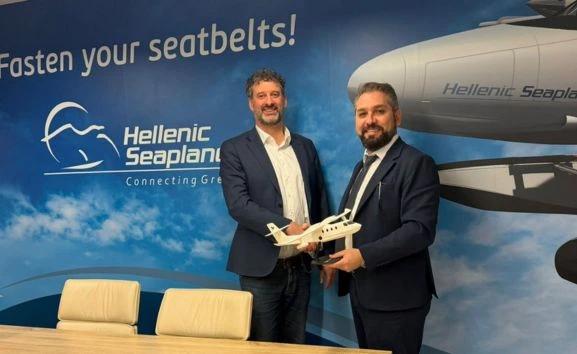
“We do not need to replicate the Maldivian model,” said Nicolas Charalambous, Chairman and CEO of Hellenic Seaplanes.
“In the Maldives, seaplanes primarily serve one purpose: transporting visitors from the airport to their resort. In Greece, they can simultaneously serve nine different markets: scheduled inter-island connections, links between the mainland and the islands, cruise passenger day trips, premium transfers to hotels and marinas, sightseeing flights, services to islands without airports, medical and government missions, lake-based operations and, in the future, cross-border connections with the Balkans, Italy and the Eastern Mediterranean.”
The Infrastructure Is in Place — and This Summer Proved It
The case for seaplane operations in Greece is no longer theoretical.
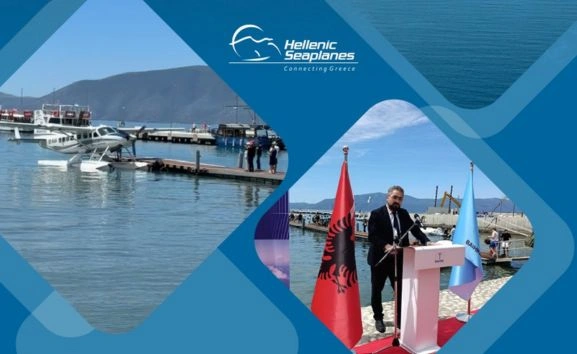
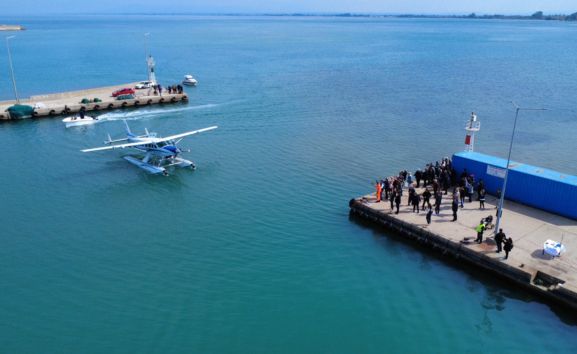
In June, Hellenic Seaplanes completed the first international seaplane flight in the history of Southeastern Europe, connecting Ioannina with Vlorë in Albania, Tirana and Lake Ohrid, laying the foundations for a wider network across the Adriatic and Ionian regions.
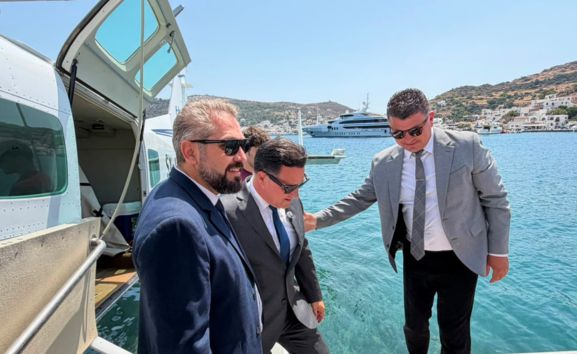
In July, one of the company’s aircraft transported the Greek Minister of Health, Members of Parliament and government officials to Skopelos, Skyros and Patmos, demonstrating in practice that the infrastructure, operational procedures and safety systems are fully functional.
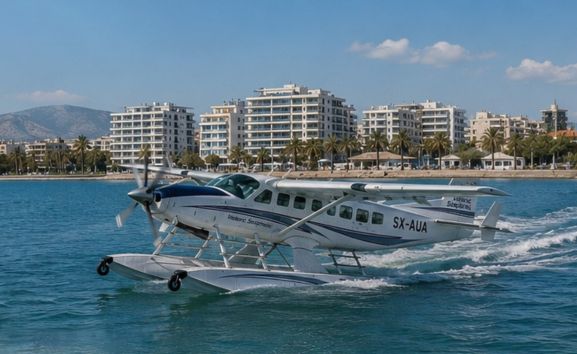
The company has already completed the licensing of 42 water fields and seaplane bases across Greece. The only remaining requirement is the final approval for commercial operations through the issuance of an Air Operator Certificate — AOC — by the Hellenic Civil Aviation Authority.
The Billion-Dollar Investment Precedent
The scale of the opportunity has already been recognised by some of the world’s largest investment organisations.
In 2013, Blackstone acquired control of the two largest seaplane operators in the Maldives, Trans Maldivian Airways and Maldivian Air Taxi, as part of a transaction with a total value of approximately USD 600 million.
Following their consolidation under Trans Maldivian Airways, the world’s largest seaplane operator was created, securing a dominant position in the market for air transfers to island resorts.
The subsequent transfer to Bain Capital was completed in successive stages, with the company’s total valuation approaching USD 1 billion.
Within only a few years, the value of the consolidated business increased by more than USD 400 million. This growth did not result simply from the addition of new aircraft. It came from the development of an integrated network, exclusive commercial relationships with resorts and the dominant position the company established in visitor transportation.
“The Maldives proved that the model works. Its example demonstrates that the real value does not lie solely in the aircraft. It lies in the network, the infrastructure, the access rights and the strategic agreements established with tourism destinations,” Mr Charalambous added.
“When these elements are combined, they create an asset of enormous investment value. Greece has the geography, the tourism demand and the international position required to create something even greater: the world’s first large-scale, multi-layered seaplane network.”
Greece Must Not Lose Another Tourism Season
Hellenic Seaplanes is calling on the Greek Government to complete the licensing process without further delay, with an unwavering commitment to safety and institutional consistency, so that Greece does not allow another summer season to pass without capitalising on one of its strongest yet still untapped competitive advantages.